
Understanding AEO in the AI Search Era
Marketing, Answer Engine Optimization, AI Search
Understanding AEO in the AI Search Era
Search has quietly changed. When someone asks ChatGPT, Perplexity, or Google AI Overview a question today, they often get a direct answer instead of a list of links to click through. That shift has a name: Answer Engine Optimization, or AEO.
The questions we hear most often are simple on the surface. What is AEO? How is it different from SEO? Does it actually work? Underneath those questions is a bigger one: when an AI platform answers a question in your industry, does it mention your business, or does it mention someone else?
AEO Is Not the Same Game as SEO
Traditional SEO was built around ranking pages and earning clicks. That still matters, but it is no longer the whole picture. AI platforms are now answering a large share of informational questions directly, before a user ever sees a list of results. Some industry research puts that figure as high as 40 to 60 percent of queries.
That means the old question, "how do we rank higher," is being joined by a new one: "how do we get cited when AI explains this topic to a potential client?" Citation is becoming its own kind of visibility, separate from a search ranking, and it runs on different signals.
Why Zero-Click Search Changes the Stakes
A growing share of searches, by some estimates two out of three, now end without a click at all. The user gets their answer on the spot. For a business, that means the old strategy of "just show up in the results and hope they click" is losing ground. If an AI system answers the question and never mentions you, you were never in the running.
Why This Is Harder Than It Looks
Here is the part that surprises most business owners: the things that make a website rank well in Google are not the same things that make an AI system trust it enough to cite. AI platforms are reading structured data, consistency across the web, and third-party verification signals that most websites, even well-designed, well-ranked ones, have never addressed. A business can be a five-star, page-one result on Google and still be functionally invisible to ChatGPT and Perplexity.
This is not something you fix by writing more blog posts. It is a technical and structural audit, and it is easy to get wrong on your own. Schema markup implemented incorrectly can do nothing at all, or worse, create conflicting signals that confuse the very systems you are trying to be found by.
Does It Actually Move the Needle?
Early data says yes. Industry surveys show the large majority of organizations investing in AEO saw a measurable, positive impact within the first year, and most are increasing their budget for it going forward. Businesses optimized for AI discovery are also seeing meaningfully higher human traffic and stronger downstream conversions, because a visitor who arrives already trusting you as "the AI's recommendation" converts differently than a cold click.
Is This a Trend or the New Normal?
AI is not replacing search, it is becoming the front door to it. Voice assistants, AI Overviews, and conversational search products are only becoming more embedded in how people find local businesses and professional services. AEO is not a short-term tactic. It is the layer that determines whether your business exists in the systems your future clients are already using to decide who to call.
Why a Human Still Needs to Do This Work
There is no shortage of software promising to check your AI visibility in seconds. Most of it runs a surface-level scan and hands you a score. The problem is that AI citation depends on things a script cannot fully judge: whether your listings actually agree with each other across a dozen directories, whether your schema markup is technically valid versus just present, and whether a third-party source an AI trusts is quietly citing outdated or conflicting information about your business.
An automated tool can tell you schema exists on a page. It cannot tell you the schema was implemented incorrectly and is sending confusing signals, or that your firm is registered under a former name on one directory and your current name everywhere else. That kind of conflict is exactly what keeps a business out of AI answers, and it takes a real, manual review to catch it.
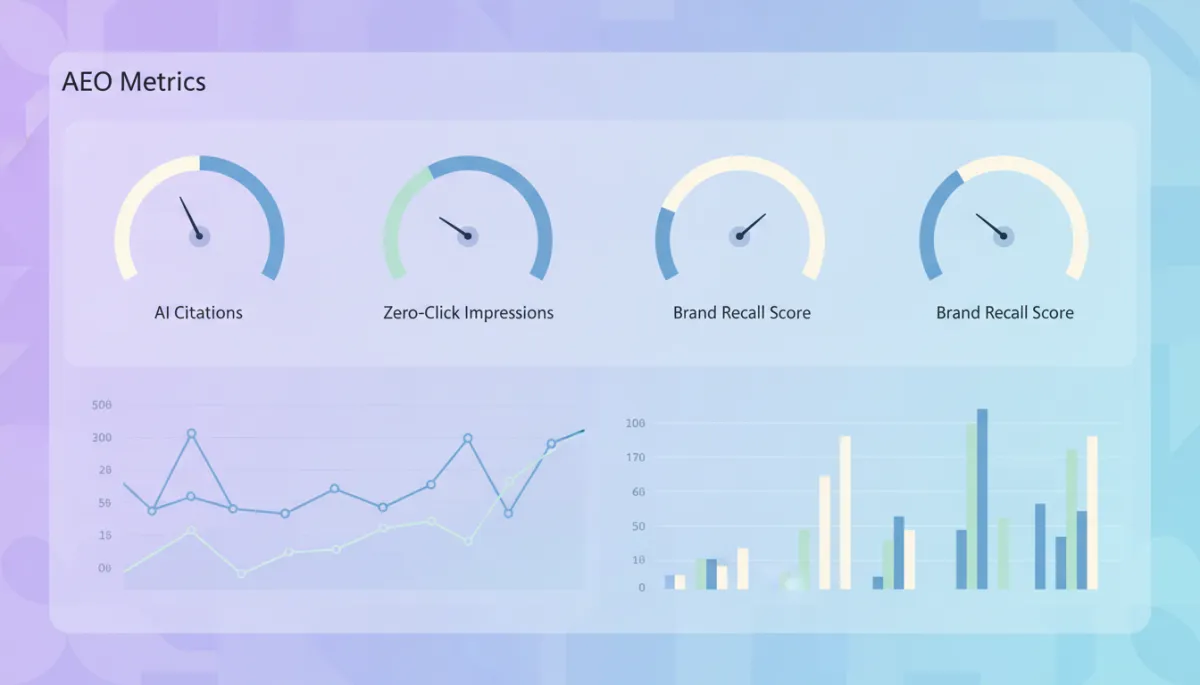
Leading teams now monitor AI citations and recall, not just rankings and clicks.
Where to Start
Knowing that AEO matters and knowing whether your specific business is currently visible in AI search are two different things. The only way to know for certain is a real audit: checking what ChatGPT, Perplexity, Claude, and Google AI Overview actually say when someone asks about a business like yours, and identifying exactly which signals are missing.
That is the work we do at Found and Verified. We run a hands-on, 20-plus point audit for local professional service businesses, no automated tools standing in for a real review, and hand you a clear picture of where you stand and what to fix.
Frequently Asked Questions About AEO
What is AEO? Answer Engine Optimization is the practice of making sure AI platforms like ChatGPT, Perplexity, Gemini, and Google AI Overview can confidently cite your business as the answer to a user's question, rather than just linking to your website.
How is AEO different from SEO? SEO is built around ranking a page so people click it. AEO is built around becoming the answer an AI system gives directly, often without a click at all. They overlap, but they are not the same discipline and they do not respond to the same fixes.
Why is AEO important right now? A large and growing share of searches now end without a click, because the AI gives the user their answer on the spot. If your business isn't part of that answer, traditional search rankings alone won't save your visibility.
How does AEO actually work? It comes down to how clearly and consistently your business's information is presented across the web, on your site, your directory listings, your schema markup, and other places AI systems check for verification before they trust a source enough to cite it.
Does AEO deliver real business results? Early data is strong. Companies investing in AEO are reporting measurable gains in AI-referred visibility, citation frequency, and downstream conversions, and most are increasing their investment rather than pulling back.
How do you measure AEO success? Rankings and clicks don't capture it. The metrics that matter are whether AI systems mention your business at all, how often, and whether that visibility is translating into inquiries.
Is AEO worth the effort for a small or solo practice? Yes, arguably more so. Larger competitors are already starting to invest here, which means smaller, local businesses that get their AI visibility right now have a real window to be the recommended answer before that becomes standard practice.
Curious where your business stands in AI search right now?
Get your AI visibility audit at foundandverified.com →


