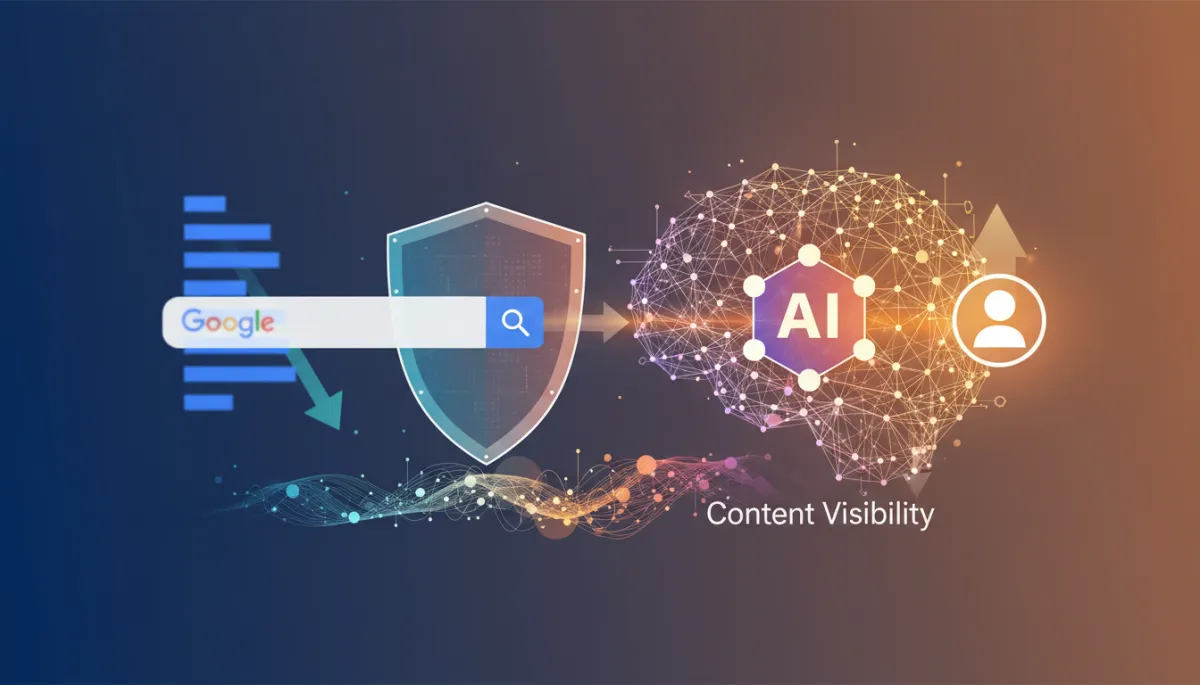
AI's Impact on Google Rankings and SEO
Marketing, Google Rankings, Search Engine Optimization, Content Visibility
Why Good Google Rankings No Longer Guarantee You'll Be Recommended by AI
Strong Google rankings used to be the gold standard for online success. If you made it to page one, you could count on visibility, traffic, and leads. But as AI assistants like ChatGPT, Gemini, Copilot, and Perplexity become the starting point for more searches, traditional search engine optimization alone is no longer enough to guarantee your content will be recommended—or even seen.
From Ten Blue Links to One Confident Answer
Classic search results give people a list of options. Even if you were sitting in the middle of page one, you still had a real shot at earning the click. People skimmed titles, compared snippets, and often opened several tabs. Content visibility was spread across multiple sites on that results page.
AI assistants flip that model. Instead of a menu of choices, people get a single, synthesized answer—often without ever seeing the underlying sources. The AI might cite two or three references, or none at all. In that world, being ranked #3 on Google doesn’t mean you’ll be part of the AI’s answer. Visibility is compressed into a tiny set of “trusted” sources the model decides to surface in that moment.
📌 Key Takeaway: Page-one rankings still give you options in Google, but AI assistants usually deliver one primary answer and a handful of sources. If you’re not in that short list, you’re effectively invisible.
AI Uses Different Signals Than Classic SEO
Most teams optimize for familiar search engine optimization levers: keywords, backlinks, technical health, and on-page structure. AI systems, on the other hand, are trained and tuned on a broader mix of signals that don’t map cleanly to traditional Google rankings.
Training data coverage: Was your site well represented in the datasets used to train or fine-tune the model? If not, the AI may simply “know” your competitors better than it knows you.
Perceived authority and clarity: AI leans toward content that is structured, explicit, and easy to summarize. Ambiguous, fluffy, or overly promotional pages are harder for models to quote with confidence, even if they rank well in search.
Safety and neutrality: On sensitive topics, AI tends to favor institutional, neutral, or consensus sources. That can push niche but high‑ranking pages out of the recommendation set.
Put simply, ranking well and being quotable are now two different goals. If your content isn’t structured in a way AI can easily digest and reuse, it may be skipped in favor of content that is—regardless of where you sit in Google’s results.
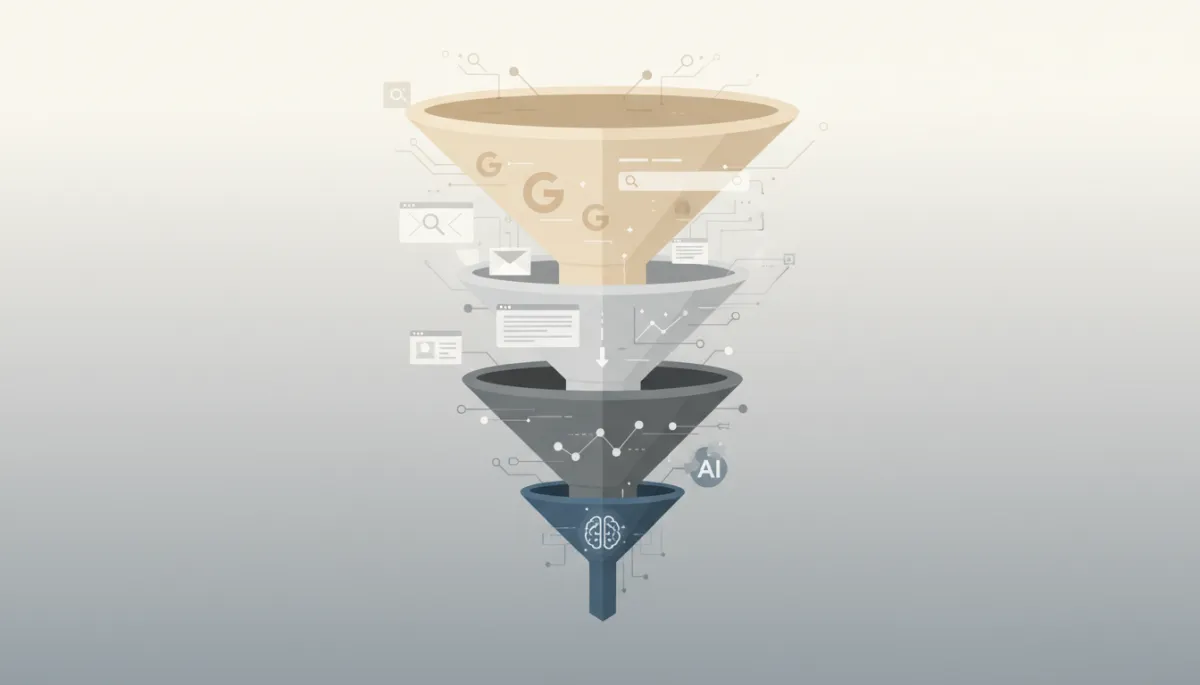
AI assistants act as a second funnel, filtering already-ranked pages into a tiny set of cited sources.
The Rise of Answer-First, Brand-Last Experiences
In traditional search, people saw your brand name, meta description, and URL before they clicked. Even impressions without clicks created some level of brand exposure. With AI assistants, the answer comes first and the brand—if it’s mentioned at all—comes later. Many users are perfectly happy with the synthesized response and never click through to the sources.
That shift means content visibility is no longer just about being present; it’s about being attributable. If the AI uses your insights but cites a competitor, they get the trust, the traffic, and the perceived authority. The high Google rankings that used to translate directly into brand exposure now sit behind an AI layer that decides whether your name shows up at all.
💡 Pro Tip: Build in clear, concise statements and definitions that AI can quote word for word. That simple shift increases the odds your brand is named when assistants deliver answers.
Why “Good Enough” SEO Is Now a Risky Strategy
For a long time, many organizations aimed for “good enough” search engine optimization: solid technical health, some intentional keyword targeting, and occasional content updates. That might still keep you on page one, but it’s increasingly not enough for AI‑driven discovery.
If your competitors are deliberately creating content that’s structured for AI—clear headings, FAQ sections, step‑by‑step explanations—they become easier sources for models to pull from.
If they’re mentioned frequently across the web (podcasts, citations, expert roundups), AI starts to associate their brand with expertise in your niche.
If they’re experimenting with AI‑native channels—custom GPTs, plugins, or direct integrations—people may bypass search entirely and interact with their brand inside AI ecosystems.
The net effect: you can hold respectable Google rankings while quietly losing share of voice in AI‑driven experiences. On paper, your SEO looks fine. In reality, your content visibility is slipping in the very places where future users are spending their time.
How to Future-Proof Your Content for AI Recommendations
None of this means SEO is dead. It does mean your strategy has to expand from “rank in Google” to “be the obvious source for both search engines and AI assistants.” A few practical shifts:
Design content for summarization: Use clear headings, bullet points, and tight explanations so models can easily extract key points and tie them back to you.
Strengthen topical authority: Build deep content clusters around your core themes so both Google and AI systems recognize you as a go‑to resource, not a one‑off article.
Invest in brand signals: Earn mentions, quotes, and references across the web so your brand shows up inside the broader knowledge graph AI relies on.
Monitor AI visibility, not just rankings: Regularly ask major AI assistants questions in your niche and track which brands they cite. Treat that with the same seriousness you give to keyword rankings.
The New Reality: SEO Plus AI Visibility
Good Google rankings still matter—but they no longer guarantee you’ll be recommended, cited, or even noticed by AI systems. We’ve moved from a search‑only landscape to a search plus AI reality, and your approach has to move with it. When you treat AI assistants as a critical new layer of discovery and shape your content for both worlds, you protect—and can even grow—your visibility in a world where one confident answer often replaces ten blue links.
Feel free to see my website at FoundandVerified.com to see how I can help you.


